Table of Contents
- Start With the Tennis Bracelet Style
- What Does CTW Mean on a Tennis Bracelet?
- Why Bracelet Length Matters
- Tennis Bracelet Carat Size at a Glance
- 1ctw: Fine and Minimal
- 2ctw: Delicate With More Presence
- 3ctw: Refined but Clearly Visible
- 4ctw: Noticeably More Diamond
- 5ctw: A Distinctive Semi Bezel Choice
- 6ctw: Substantial and Versatile
- 8ctw: Bold Without Reaching the Largest Sizes
- 10ctw: Entering Statement Jewelry
- 12ctw: More Scale Across the Entire Bracelet
- 14ctw: Decidedly Large
- 16ctw: Dramatic
- 18ctw: Maximum Impact
- What Is the Best Tennis Bracelet Carat Size for Everyday Wear?
- What Tennis Bracelet Carat Size Works Best for Stacking?
- Do Bezel Tennis Bracelets Look Bigger?
- Does Diamond Quality Matter More as the Diamonds Get Larger?
- How Lab Grown Diamonds Changed Tennis Bracelet Carat Size
- How Should a Tennis Bracelet Fit?
- Matching a Tennis Bracelet With a Tennis Necklace
- 1. How Noticeable Do You Want the Bracelet to Be?
- 2. Which Setting Style Do You Prefer?
- 3. Will You Wear It Alone or With Other Jewelry?
- FAQs
Choosing the right tennis bracelet carat size is about much more than picking the largest total carat weight within your budget.
Some people want a delicate line of diamonds that can be worn every day. Others prefer clearly visible stones with enough presence to carry the wrist on their own. At the highest carat weights, the bracelet becomes a true statement piece.
The setting matters too.
A full bezel bracelet can look noticeably different from a claw set bracelet at the same total carat weight. Bracelet length, stone count and individual diamond dimensions can also change how substantial a piece appears.
That is why choosing a tennis bracelet carat size should start with the look you want, not simply the number on the product page.
This guide will help you compare the different styles and then narrow your choice from refined 1ctw designs all the way through dramatic 18ctw bracelets.
Start With the Tennis Bracelet Style
Before comparing carat weights, decide which setting style appeals to you.
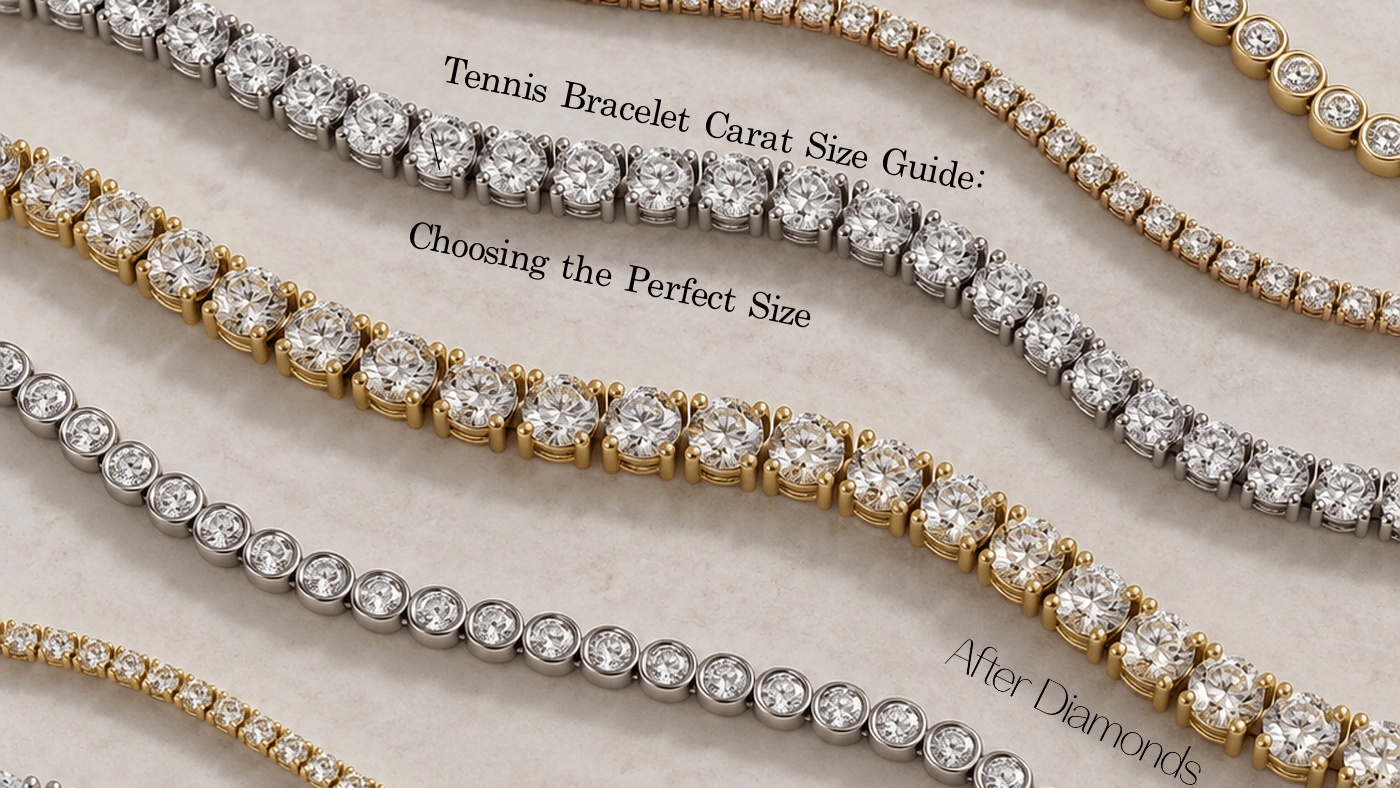
At After Diamonds, our collection includes claw set, full bezel and semi bezel tennis bracelets.
Each setting presents the diamonds differently. That means the same tennis bracelet carat size can create a different overall impression depending on how the stones are held.
Claw Set Tennis Bracelets
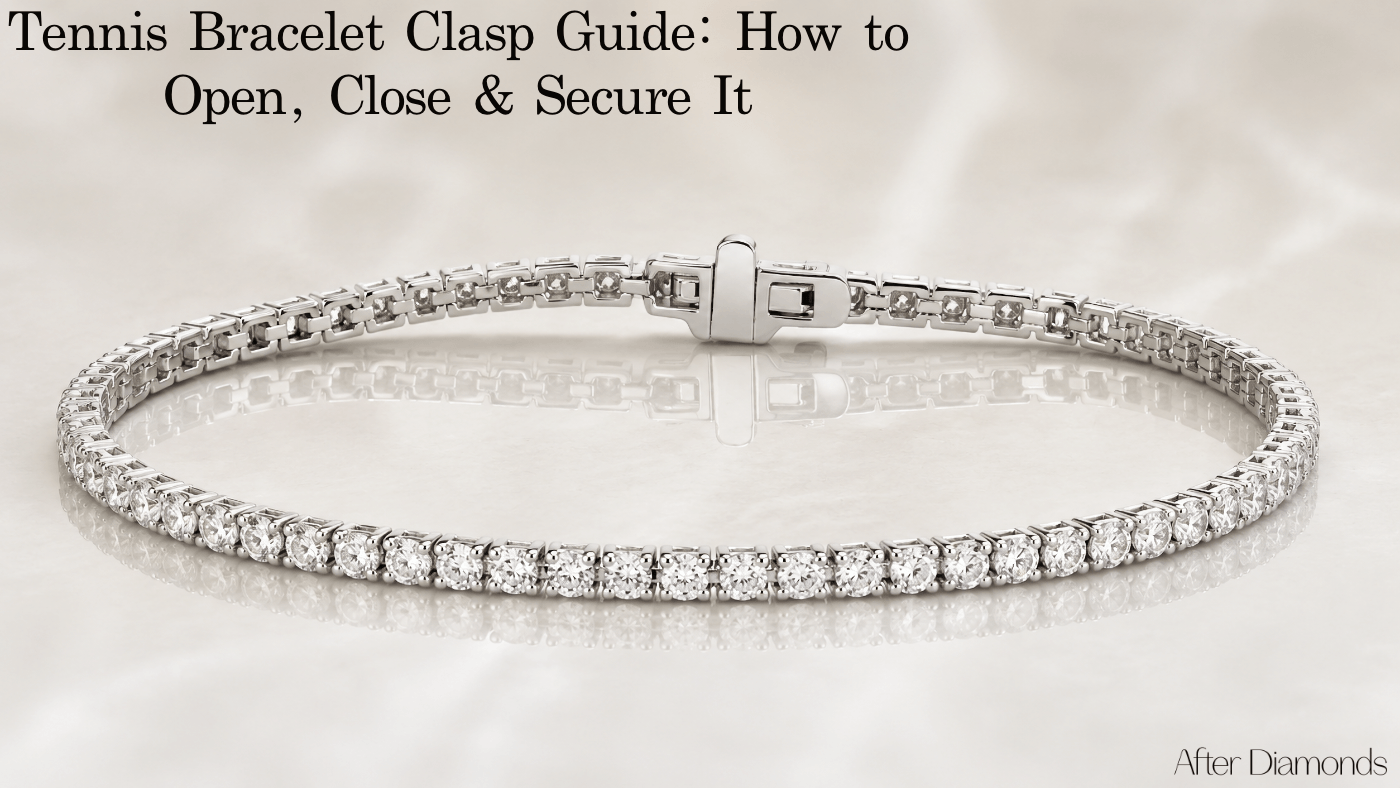
A claw setting uses small prongs to secure each diamond while leaving much of the stone exposed.
This creates the classic tennis bracelet appearance: a nearly continuous line of diamonds with relatively little visible metal from above.
Claw set bracelets are ideal if you want:
• Maximum focus on the diamonds
• A traditional tennis bracelet appearance
• Less visible metal around each stone
• The widest range of available carat weights
Our claw set collection begins at 2ctw and continues through 3ctw, 4ctw, 6ctw, 8ctw, 10ctw, 12ctw, 14ctw, 16ctw and 18ctw.
Because the basic setting remains relatively discreet, the claw collection also makes it easy to appreciate how much the appearance changes as total carat weight increases.
Full Bezel Tennis Bracelets
A full bezel surrounds each diamond with a rim of precious metal.
That creates a more defined and structured appearance.
Instead of the diamonds visually blending into one continuous line, each stone becomes its own clearly outlined link.
The bezel also contributes to the visible width of the bracelet. Because of this, a particular tennis bracelet carat size can sometimes appear more substantial in a full bezel design than you might expect from the carat number alone.
Our full bezel tennis bracelets are available in:
1ctw, 2ctw, 4ctw, 6ctw and 8ctw.
This also gives buyers several direct comparisons between claw and bezel bracelets at identical total carat weights.
Semi Bezel Tennis Bracelets
Semi bezel designs sit between claw and full bezel settings.
Precious metal partially surrounds each diamond while leaving more of the stone exposed than a full bezel.
This creates some of the structure and definition associated with bezel jewelry while preserving more of the open diamond appearance found in a claw setting.
Our current semi bezel tennis bracelets are available in 3ctw and 5ctw.
The 5ctw option is particularly distinctive because it is not simply another step in the traditional claw set progression.
If you like visible metal around the diamonds but do not want them completely surrounded, the semi bezel style offers an attractive middle ground.
What Does CTW Mean on a Tennis Bracelet?
CTW means carat total weight.
If a bracelet is listed as 6ctw, all of the diamonds throughout the bracelet weigh approximately six carats combined.
It does not mean that every diamond weighs six carats.
A tennis bracelet contains many individual stones, so that total diamond weight is distributed around the wrist.
As tennis bracelet carat size increases, the individual diamonds generally become larger. This usually creates more visible diamond surface, greater bracelet width and stronger overall presence.
However, total carat weight still does not tell you exactly how large a bracelet will look.
Bracelet length, stone count and setting construction matter too.
Why Bracelet Length Matters
Bracelet length affects how the total diamond weight is distributed.
Imagine two bracelets with exactly the same total carat weight.
One measures 6.5 inches.
The other measures 7.5 inches.
The longer bracelet has an additional inch to cover around the wrist. Depending on the design, this can mean more individual stones and therefore a different average diamond size.
That is why tennis bracelet carat size should always be considered alongside bracelet length.
Wrist size matters visually as well.
The same bracelet can look more dominant on a smaller wrist and somewhat more proportional on a larger wrist.
When comparing options, consider:
• Total carat weight
• Bracelet length
• Setting style
• Individual diamond dimensions
• Stone count
Once you understand those factors, choosing the right amount of diamond presence becomes much easier.
At After Diamonds, all our tennis bracelets are a standard length of 7 inches, which gives you a consistent catalogue to choose from. All custom length requests can be
Tennis Bracelet Carat Size at a Glance
If you are not sure where to begin, this table gives you a quick overview of how tennis bracelet carat size generally changes the look. Sizes within each group are not identical, but they share a similar level of overall presence.
| Tennis bracelet carat size | Overall look | Best for | Available After Diamonds styles |
|---|---|---|---|
| 1ctw to 3ctw | Delicate to refined | Everyday wear, stacking, watches, understated jewelry | 1ctw full bezel; 2ctw claw and full bezel; 3ctw claw and semi bezel |
| 4ctw to 8ctw | Noticeable to bold | Visible everyday luxury, standalone wear, stronger diamond presence | 4ctw claw and full bezel; 5ctw semi bezel; 6ctw claw and full bezel; 8ctw claw and full bezel |
| 10ctw to 14ctw | Statement | Larger diamonds, prominent wrist presence, wearing alone | 10ctw, 12ctw and 14ctw claw set |
| 16ctw to 18ctw | Maximum impact | Dramatic diamond jewelry and very large individual stones | 16ctw and 18ctw claw set |
1ctw to 3ctw: Delicate to Refined
The 1ctw to 3ctw range represents the most refined end of the After Diamonds collection.
Grouping these sizes together does not mean they look the same.
A 1ctw bracelet is considerably finer than a 3ctw bracelet.
They belong in the same broad category because all three favor elegance and versatility rather than dramatic size.
1ctw: Fine and Minimal
Our 1ctw tennis bracelet is a full bezel design and represents the smallest tennis bracelet carat size in the current collection.
The diamonds are relatively fine, but the metal surrounding each one helps define the individual stones.
The result is delicate without looking visually lost.
A 1ctw bracelet is particularly well suited to someone who wants to:
• Stack several bracelets together
• Wear diamonds beside a watch
• Add subtle sparkle to everyday outfits
• Keep the overall appearance understated
It is the most minimal choice in the collection.
2ctw: Delicate With More Presence
At 2ctw, the bracelet becomes noticeably more visible while still remaining refined.
This size is available in both claw set and full bezel designs.
A 2ctw claw bracelet creates a classic fine line of exposed diamonds.
A 2ctw bezel bracelet gives the individual stones more definition through their surrounding metal.
This makes 2ctw a particularly useful example of how setting style can alter the appearance of the same tennis bracelet carat size.
For someone purchasing a first tennis bracelet, 2ctw can offer a very versatile combination of sparkle, wearability and subtlety.
3ctw: Refined but Clearly Visible
At 3ctw, the diamonds gain another noticeable level of presence.
The bracelet still feels refined, but individual stones become easier to distinguish and the piece can comfortably stand on its own.
After Diamonds offers both claw set and semi bezel designs at 3ctw.
The claw version provides the traditional diamond focused appearance.
The semi bezel introduces more visible structure around each stone.
A 3ctw bracelet can be an excellent choice if you want something substantial enough to wear alone without moving into a particularly bold size.
3ctw Lab Grown Diamond Tennis Bracelet D/VVS Quality Set in 10k White Gold
$1,609.00
$2,750.00
Illuminate your wrist with this stunning lab diamond tennis bracelet. Set in sleek 10k white gold, it features 3.00ctw of brilliant D/VVS lab-grown diamonds that create a delicate balance of sparkle and shine. Each stone is carefully set to maximize… read more

Who Should Choose 1ctw to 3ctw?
This range works especially well for someone who prefers understated jewelry, stacks multiple pieces or wants a bracelet that can transition easily between casual and formal wear.
There is still a meaningful progression.
1ctw is genuinely delicate.
2ctw introduces more visible diamond.
3ctw creates enough presence to stand confidently on its own.
If your preferred tennis bracelet carat size is refined rather than bold, start here.
4ctw to 8ctw: The Sweet Spot for Visible Luxury
The 4ctw to 8ctw range is where tennis bracelets begin to deliver considerably more diamond presence.
For many buyers, this is the sweet spot.
The bracelet is clearly noticeable, the diamonds are easier to appreciate individually and the piece can comfortably become the main jewelry on the wrist.
But a 4ctw bracelet and an 8ctw bracelet are not interchangeable.
There is a significant progression within this group.
4ctw: Noticeably More Diamond
At 4ctw, the difference from the smaller sizes becomes immediately apparent.
The individual diamonds are easier to see and the bracelet gains more visual weight across the wrist.
Both claw and full bezel designs are available at this weight.
This makes 4ctw one of the best tennis bracelet carat size comparisons in our collection.
A claw set 4ctw bracelet emphasizes the diamonds themselves.
A full bezel 4ctw bracelet surrounds those diamonds with visible metal and creates a more defined appearance.
4ctw Lab Grown Diamond Tennis Bracelet D/VVS Quality Set in 10k White Gold
$1,718.00
$2,970.00
Immerse yourself in the world of ethereal beauty with this lab diamond tennis bracelet. Set in sleek 10k white gold, it features 4.00ctw of dazzling D/VVS lab-grown diamonds that create a captivating sparkle with every movement. Each stone is carefully… read more

Lab Grown Diamond Bezel Set Tennis Bracelet 4.00ctw D/VVS in 10k White Gold
$1,857.00
$3,195.00
Indulge in timeless elegance with our Lab Diamond Bezel Set Tennis Bracelet, featuring 4.00ctw of ethical, real round diamonds, each meticulously sized at 4.5mm. This classic yet stylish masterpiece is crafted in luminous 10k white gold, with each gemstone securely… read more

5ctw: A Distinctive Semi Bezel Choice
Our 5ctw tennis bracelet is a semi bezel design.
That matters because its appearance should not be treated as though it were simply halfway between a 4ctw and 6ctw claw bracelet.
The partially surrounding metal becomes part of the design.
At 5ctw, the diamonds have strong presence while the semi bezel adds definition without fully enclosing the stones.
This makes it an interesting choice for someone who wants something more distinctive than a traditional claw bracelet.
Lab Grown Diamond Semi Bezel Tennis Bracelet 5.00ctw D/VVS in 14k Yellow Gold
$2,995.00
$5,190.00
Discover elegance with the Lab Diamond Semi Bezel Tennis Bracelet, featuring a dazzling 5.00ctw of lab grown diamonds in exceptional D/VVS quality, set in a sleek 14k yellow gold semi bezel design for a modern take on a classic style.… read more

6ctw: Substantial and Versatile
At 6ctw, the bracelet moves further into substantial luxury.
The diamonds are more prominent and the overall line across the wrist becomes noticeably wider.
After Diamonds offers both claw set and full bezel designs at this weight.
The claw version emphasizes a continuous line of exposed diamond.
The full bezel creates clearly defined individual settings and more visible precious metal.
For someone looking for a tennis bracelet carat size with significant presence but without entering the largest statement categories, 6ctw is one of the most versatile points in the collection.
8ctw: Bold Without Reaching the Largest Sizes
The 8ctw bracelet sits at the bold end of this middle category.
At this size, you are clearly looking at a row of individual diamonds rather than simply a line of sparkle.
After Diamonds offers both claw and full bezel 8ctw bracelets.
It is also the largest total carat weight currently available in our full bezel collection.
An 8ctw bracelet has enough presence to become the focal point of the wrist, but it still sits below the larger 10ctw through 18ctw claw set statement pieces.
Who Should Choose 4ctw to 8ctw?
Choose this range if you want diamonds that are clearly visible and a bracelet substantial enough to wear alone.
The differences within the group remain important.
4ctw sits at the more refined end.
5ctw and 6ctw create considerably more presence.
8ctw is firmly bold.
For many shoppers, the ideal tennis bracelet carat size will fall somewhere within this range because it combines visible luxury with broad wearability.
10ctw to 14ctw: Statement Territory
Once you reach 10ctw, the bracelet begins to serve a different visual purpose.
These sizes are not simply slightly larger versions of the middle range.
The diamonds themselves become a major part of what you notice.
Our 10ctw, 12ctw and 14ctw options are claw set, keeping the metal relatively discreet and allowing the increasing size of the diamonds to dominate.
10ctw: Entering Statement Jewelry
A 10ctw tennis bracelet is unmistakably substantial.
The individual stones are prominent enough to appreciate separately, while the overall bracelet carries significant width across the wrist.
For someone looking for a bold tennis bracelet carat size without immediately choosing one of the very largest pieces, 10ctw is a natural entry point.
10ctw Lab Grown Diamond Tennis Bracelet D/VVS Quality Set in 14k White Gold
$4,114.00
$7,130.00
Experience the epitome of luxury with this lab diamond tennis bracelet set in 14k white gold. Featuring 10.00ctw of beautifully matched round lab-grown diamonds with exceptional D/VVS quality, this stunning piece delivers remarkable brilliance and refined elegance. The 7" bracelet… read more

12ctw: More Scale Across the Entire Bracelet
Moving from 10ctw to 12ctw is not simply about adding two carats to a specification sheet.
That additional diamond weight is distributed throughout the entire bracelet.
The individual stones increase in scale and the finished piece becomes more visually substantial.
A 12ctw bracelet makes sense for someone who already knows they prefer larger diamond jewelry.
14ctw: Decidedly Large
At 14ctw, the tennis bracelet becomes very substantial.
Each diamond is an obvious part of the design and the continuous row of stones creates significant visual impact.
This is not a size intended to disappear quietly into an outfit.
It works particularly well for someone who wants the bracelet to be one of the first pieces of jewelry you notice.
Who Should Choose 10ctw to 14ctw?
This range is best suited to buyers who want larger individual diamonds, significant wrist presence and a bracelet that can act as the primary piece of jewelry.
There is still an important progression.
10ctw introduces the statement look.
12ctw increases the scale further.
14ctw is decidedly large.
If your preferred tennis bracelet carat size should look bold at first glance, this is the range to explore.
16ctw and 18ctw: Maximum Diamond Presence
The 16ctw and 18ctw claw set bracelets deserve their own category.
These are the largest options in the current After Diamonds collection.
At this level, large individual diamonds are part of the entire purpose of the bracelet.
16ctw: Dramatic
A 16ctw bracelet is exceptionally substantial.
The individual stones are clearly visible and create a continuous sequence of large round diamonds around the wrist.
This size suits someone who is already comfortable wearing significant diamond jewelry.
For a minimalist wearer, it may feel enormous.
For someone who loves statement jewelry, it may feel exactly right.
18ctw: Maximum Impact
At 18ctw, you reach the largest tennis bracelet carat size currently offered by After Diamonds.
It represents the opposite end of the spectrum from the fine 1ctw full bezel bracelet.
An 18ctw piece is designed around large diamonds, significant width and maximum visual impact.
It does not require additional jewelry to create presence.
The bracelet itself is the centerpiece.
18ctw Lab Grown Diamond Tennis Bracelet D/VVS Quality Set in 14k White Gold
$6,262.00
$10,890.00
Adorn your wrist with the elegance of this exquisite 18.00ctw lab diamond tennis bracelet set in 14k white gold. Radiant round lab-grown diamonds deliver captivating sparkle and refined brilliance, creating a truly luxurious look. Each diamond is carefully selected for… read more

Is Bigger Always Better?
No.
The best tennis bracelet carat size is not automatically the largest one you can afford.
A bracelet should suit your personal style, wrist and intended use.
Someone who normally wears understated jewelry may get far more use from a 2ctw or 3ctw bracelet than an 18ctw piece.
Someone who loves substantial jewelry may feel that smaller diamonds do not create enough impact.
Think about presence rather than prestige.
Ask yourself:
Do I want the bracelet to blend naturally with my other jewelry?
Do I want it to stand confidently on its own?
Or do I want it to make an unmistakable statement?
Those questions are more useful than simply asking which number is best.
What Is the Best Tennis Bracelet Carat Size for Everyday Wear?
There is no universal answer.
For many people, 2ctw through 6ctw provides the easiest balance between visible diamonds and everyday versatility.
A 2ctw or 3ctw bracelet layers easily.
A 4ctw bracelet provides more visible presence without becoming particularly large.
A 5ctw or 6ctw bracelet looks substantially richer while remaining versatile for someone who enjoys noticeable jewelry.
An 8ctw bracelet is bolder, but that does not prevent it from being worn every day.
Someone accustomed to large fine jewelry may comfortably wear 10ctw or more as an everyday piece.
Your personal style matters more than convention.
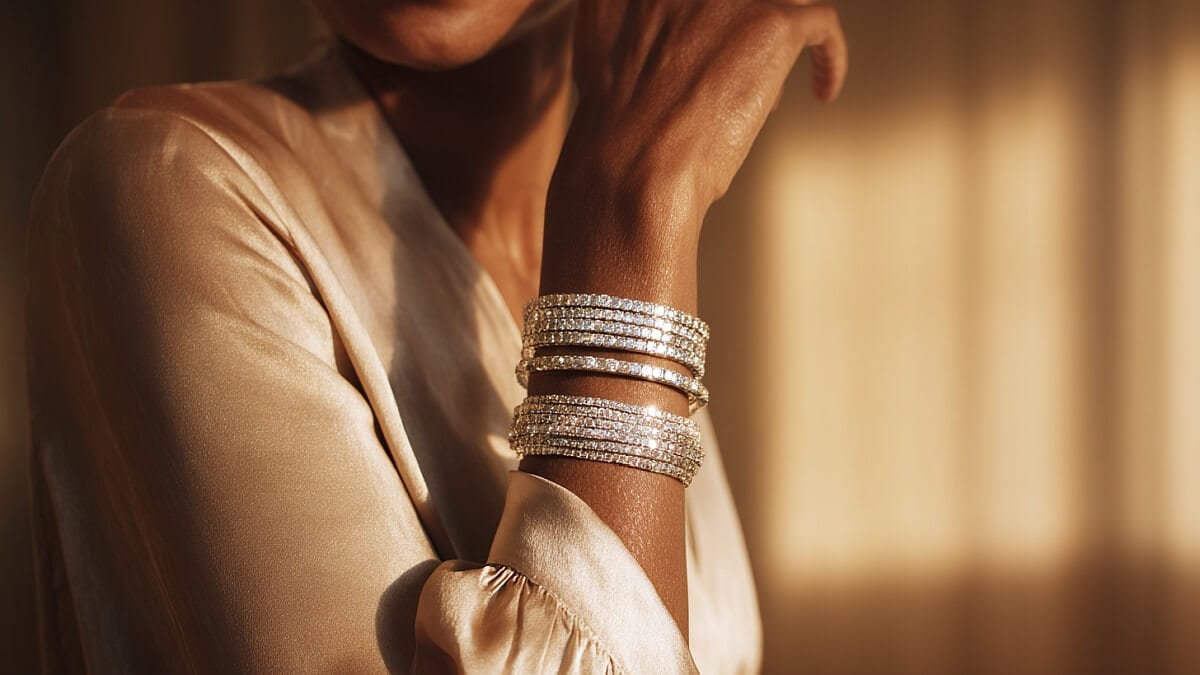
What Tennis Bracelet Carat Size Works Best for Stacking?
Smaller and medium bracelets generally provide the greatest flexibility.
The 1ctw through 3ctw range can sit comfortably alongside:
• Watches
• Bangles
• Chain bracelets
• Additional tennis bracelets
A 4ctw or 6ctw bracelet can act as the centerpiece of a stack while still leaving room for other jewelry.
As tennis bracelet carat size moves toward 8ctw, 10ctw and beyond, the bracelet naturally begins to dominate the wrist.
You can still stack larger pieces, but the surrounding jewelry should complement rather than compete with them.
Do Bezel Tennis Bracelets Look Bigger?
They can.
A full bezel surrounds each diamond with visible precious metal.
That metal adds definition and contributes to the apparent width of every link.
As a result, two bracelets with the same tennis bracelet carat size may look noticeably different when one is claw set and the other is full bezel.
The 2ctw, 4ctw, 6ctw and 8ctw sizes in our collection are particularly useful for comparing the two styles directly.
If you prefer the diamonds themselves to dominate, claw may appeal more.
If you like clearly framed diamonds and a stronger metal presence, full bezel may be the better fit.
Does Diamond Quality Matter More as the Diamonds Get Larger?
As individual diamonds become larger, their characteristics become easier to appreciate.
Consistency is particularly important in a tennis bracelet because many diamonds sit immediately beside one another.
Good matching helps create an even line of color, clarity and sparkle around the wrist.
At After Diamonds, many of our tennis bracelets use D/VVS lab grown diamonds, allowing substantial total carat weights to be paired with high color and clarity specifications.
How Lab Grown Diamonds Changed Tennis Bracelet Carat Size
Tennis bracelets require many diamonds.
As total carat weight increases, the quantity of diamond material required rises significantly.
With comparable natural diamonds, moving from a fine bracelet into 10ctw, 14ctw or 18ctw can create an enormous increase in cost.
Lab grown diamonds change what many buyers can realistically consider.
Larger individual stones, greater total carat weights and high color and clarity can become much more attainable within the same overall jewelry budget.
That freedom is particularly relevant at the upper end of the tennis bracelet carat size range, where the difference in total diamond material can be dramatic.
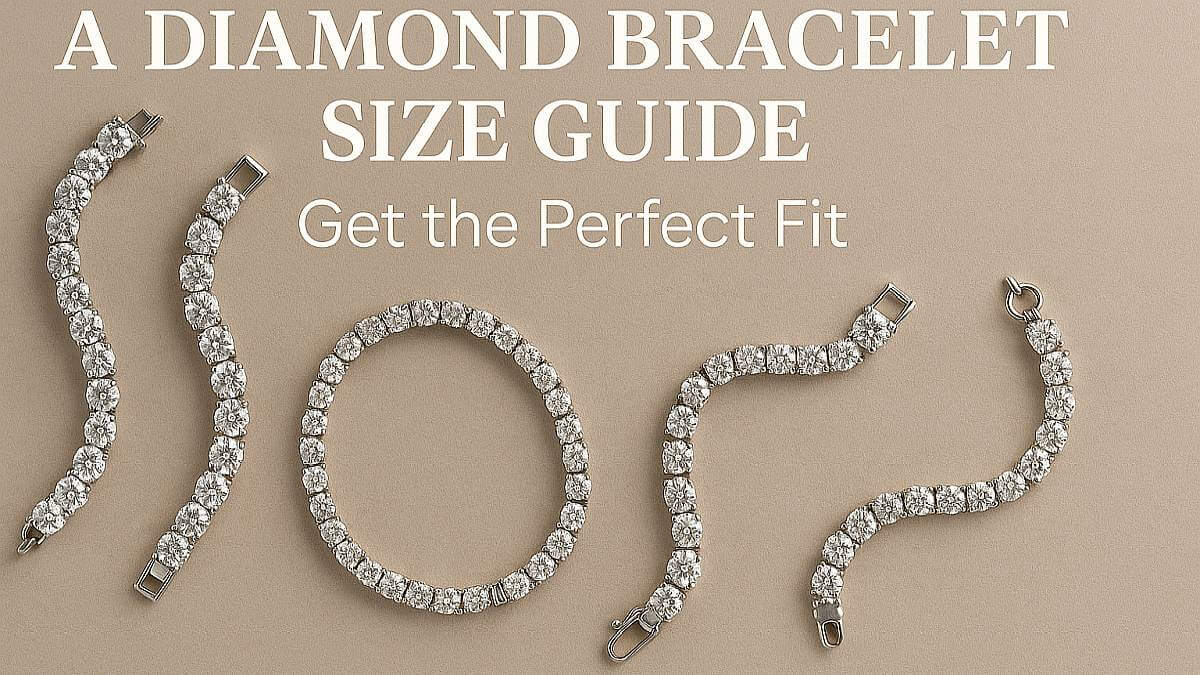
How Should a Tennis Bracelet Fit?
Choosing the right carat weight is only part of the decision.
The bracelet also needs to fit your wrist correctly.
A tennis bracelet should generally have enough room to move comfortably without being so loose that it constantly flips or catches.
Too tight and it may feel restrictive.
Too loose and it may slide excessively toward the hand.
Wrist size can also change how a particular tennis bracelet carat size appears.
The same bracelet may look extremely substantial on a smaller wrist and somewhat more proportional on a larger wrist.
This is why bracelet length and wrist measurements should be considered alongside total carat weight.
Matching a Tennis Bracelet With a Tennis Necklace
Once you understand how much diamond presence you prefer on the wrist, the same thinking can help you choose a tennis necklace.
Someone drawn to the refined appearance of smaller bracelets may prefer a finer diamond necklace.
Someone choosing a 10ctw, 14ctw or 18ctw bracelet may naturally gravitate toward a much more substantial tennis necklace.

20ctw Lab Grown Diamond Tennis Necklace D/VVS Quality in 14k White Gold
$8,618.00
$15,295.00
Embrace the timeless appeal of white gold with this tennis necklace featuring 20ctw of lab-grown D/VVS quality diamonds. Set in 14k white gold, this 17" necklace provides the perfect fit, while our lifetime workmanship guarantee ensures long-lasting beauty.… read more

A necklace requires considerably more length than a bracelet, which means many more diamonds are needed to create the continuous line.
Lab grown diamonds make substantial total carat weights particularly attractive in this category as well.
How to Choose Your Perfect Tennis Bracelet Size
If you are still undecided, narrow your options with three questions.
1. How Noticeable Do You Want the Bracelet to Be?
For a delicate or refined look:
1ctw to 3ctw
For visible everyday luxury:
4ctw to 8ctw
For statement jewelry:
10ctw to 14ctw
For maximum impact:
16ctw or 18ctw
These categories do not mean every size inside a group looks the same.
Far from it.
A 4ctw bracelet is noticeably finer than an 8ctw bracelet. A 10ctw bracelet is less dramatic than 14ctw.
The groups simply provide a useful starting point based on overall presence.
2. Which Setting Style Do You Prefer?
Claw settings emphasize exposed diamond and provide the traditional tennis bracelet appearance.
Full bezels create more definition and make the surrounding precious metal part of the design.
Semi bezels combine elements of both.
The setting can significantly change how a tennis bracelet carat size looks, so choose a style you genuinely like before becoming too attached to a specific carat number.
3. Will You Wear It Alone or With Other Jewelry?
Smaller bracelets are naturally easier to stack.
Medium sizes can work equally well alone or layered.
Larger designs tend to become the centerpiece.
Think about the jewelry you already wear.
If you normally wear a watch and several bracelets together, a finer size may integrate more naturally.
If the tennis bracelet will be the only piece on your wrist, you may prefer additional diamond presence.
The Bottom Line on Tennis Bracelet Carat Size
There is no single perfect tennis bracelet carat size.
The right choice depends on how much diamond presence you want, your preferred setting, your wrist proportions and the way you intend to wear the bracelet.
The 1ctw to 3ctw range offers the most refined appearance, although there is a meaningful difference between a fine 1ctw bracelet and a more visible 3ctw design.
The 4ctw to 8ctw range provides a broad middle ground where diamonds become increasingly prominent while maintaining plenty of versatility.
At 10ctw through 14ctw, the bracelet enters statement territory.
At 16ctw and 18ctw, maximum diamond presence becomes part of the appeal.
Setting style changes the impression at every stage.
A claw set bracelet emphasizes exposed diamond.
A full bezel gives each stone a defined metal border.
A semi bezel combines additional structure with more exposed diamond.
Start by deciding how you want the bracelet to look on your wrist.
Then choose the setting you love.
Once those two decisions are clear, finding the right tennis bracelet carat size becomes much easier.
FAQs
What Is a Good Tennis Bracelet Carat Size?
There is no single best tennis bracelet carat size. Around 1ctw to 3ctw provides a more refined appearance, 4ctw to 8ctw creates greater presence, and 10ctw or more becomes increasingly bold.
Is a 3ctw Tennis Bracelet Small?
A 3ctw bracelet remains relatively refined compared with the larger options, but it has noticeably more presence than a 1ctw or 2ctw bracelet.
It can work well both alone and as part of a stack.
Is a 6ctw Tennis Bracelet Large?
A 6ctw bracelet is substantial without reaching the largest statement sizes.
It is an attractive middle range option for someone who wants clearly visible diamonds and significant wrist presence.
Is an 8ctw Tennis Bracelet Too Big for Everyday Wear?
Not necessarily.
An 8ctw bracelet is bold, but whether it feels appropriate for everyday wear depends on your personal jewelry style.
Is 10ctw Considered a Large Tennis Bracelet?
Yes.
At 10ctw, the individual diamonds become considerably more prominent and the bracelet enters statement territory.
What Is the Largest Tennis Bracelet Carat Size at After Diamonds?
The current After Diamonds collection extends to an 18ctw claw set tennis bracelet.
Does a Bezel Setting Make a Tennis Bracelet Look Bigger?
It can.
The precious metal surrounding each diamond contributes to the visible width and definition of the bracelet, so a bezel design may appear more substantial than a claw design with a similar total diamond weight.
Is a Claw or Bezel Tennis Bracelet Better?
Neither is inherently better.
A claw setting emphasizes exposed diamond and creates the traditional tennis bracelet look.
A full bezel creates greater definition and makes the precious metal more visible around each stone.
The better choice depends on the appearance you prefer.
Does Wrist Size Affect the Best Tennis Bracelet Carat Size?
Yes.
Wrist proportions affect how substantial a bracelet looks. Bracelet length may also affect how the total diamond weight is distributed across the piece.
What Does CTW Mean?
CTW means carat total weight.
It refers to the combined weight of all diamonds within the bracelet rather than the weight of one individual stone.